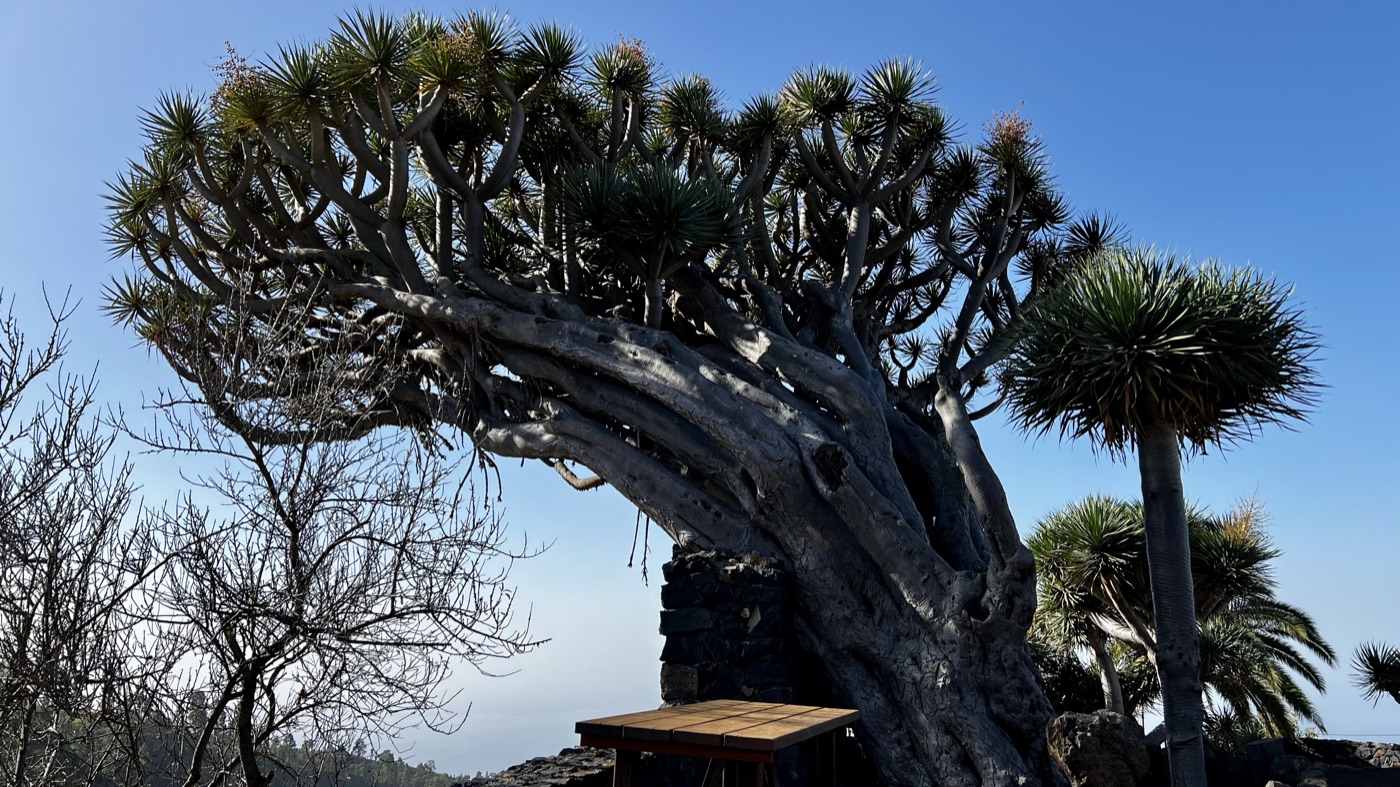
Most people have never heard of La Palma. Honestly, that is the best thing about it. While everyone else piles into Tenerife and Gran Canaria, this small, ferociously green island in the far northwest of the Canaries has stayed quiet and wild and gloriously uncrowded. That is starting to shift now that Jet2 flies here direct from Manchester, with Stansted following in late 2026, so my honest advice is simple: come now, before the rest of the world catches on.
I grew up on this island, so what follows is not a list scraped off a brochure. It is the stuff I actually send to friends when they ask what they should do here. Here we go.
Why La Palma is different
No mega-resorts. No strip of identical hotels. No crowds. Instead you get a volcano running down the spine of the island, laurel forests that feel prehistoric, black-sand beaches, and tiny villages where lunch takes two hours and nobody is in a hurry. It is a UNESCO Biosphere Reserve and the world’s first Starlight Reserve, which tells you the two things it does better than almost anywhere: nature, and the night sky. It is small, too. You can drive from the misty green north to the sun-baked volcanic south in under two hours, so a week is plenty.
1. Get into the Caldera de Taburiente
The Caldera is the beating heart of the island, a vast erosion crater about 8 km wide, ringed by cliffs and filled with Canary pine, deep ravines and springs. It is the one thing I would not let anyone leave without seeing.
You do not have to be a hardcore hiker. For the easy version, drive up to the La Cumbrecita viewpoint and just stand there with your mouth open (parking is limited and usually needs a free advance booking, so sort that first). For the real thing, take a taxi to the Los Brecitos trailhead and walk down through the crater to the Barranco de las Angustias, roughly six hours past viewpoints and the Cascada de Colores, a waterfall stained orange by the minerals in the rock.
If you would rather someone else handle the logistics, guided hikes and 4×4 trips into the Caldera are easy to book online.
2. Look up at Roque de los Muchachos
At 2,426 m, Roque de los Muchachos is the roof of the island, and one of the best places on the planet to look at stars. There is a world-class observatory up here, second only to Hawaii’s Mauna Kea in the northern hemisphere, and there is a reason they built it on La Palma: the skies are protected by law and astonishingly dark.
Drive up by day for views out over a sea of clouds. But the real magic is after dark. Guided stargazing tours, with proper telescopes, an astronomer and transport up the mountain, are the easiest way to do it, and they sell out fast in summer. If you do one paid thing on La Palma, make it this.
3. Walk the Ruta de los Volcanes
This is the big one for hikers: a long, exposed ridge walk down the volcanic spine of the south, roughly 17 to 24 km from El Pilar to Fuencaliente, with the ocean on both sides and craters underfoot the whole way. It is demanding and unforgettable in equal measure. Bring water, sun cover and decent shoes. And a local tip: in summer, do it at night under a full moon. More on that in our guide to the best hikes.
4. Drive the south: Fuencaliente and the salt pans
The southern tip around Fuencaliente is pure volcano country, dry and black and a bit otherworldly. Visit the San Antonio and Teneguía volcanoes, then drop down to the Salinas de Fuencaliente, working sea-salt pans next to a candy-striped lighthouse, with a little seafood restaurant right above the water. This is also wine country, where the local Vega Norte wines grow straight out of the black volcanic soil. Order a glass.
5. See what the 2021 volcano did
In 2021 the Tajogaite volcano erupted for nearly three months and reshaped the western side of the island. It is long over, scientists have confirmed there is no sign of it waking up again, and La Palma is completely safe to visit. Standing at a viewpoint looking over the vast new lava fields is genuinely moving, especially when you realise people’s homes are under there.
One honest note for 2026: the coastal towns of Puerto Naos and La Bombilla were shut after the eruption because of trapped volcanic gas, and they have been slowly reopening, with over a thousand families now back. Some access is still being restored, so check the current situation before you plan to stay down there.
6. Find a black-sand beach
The beaches here are wild, volcanic and black, not the imported golden stuff. For easy swimming and a beach bar, go to Puerto de Tazacorte or the coves near Los Cancajos. For drama, walk down to Playa de Nogales in the northeast, a huge wild beach below the cliffs. The currents there are strong, though, so it is more for looking than swimming.
7. Wander Santa Cruz de La Palma
The capital is one of the prettiest towns in the Canaries, a 16th-century colonial port with cobbled lanes and those famous wooden balconies hanging out over the seafront. There is not a checklist of sights so much as a mood. Go in the morning, get a coffee, poke around the shops, eat some fresh goat’s cheese, and let it be slow.
8. Get out on the water
The Atlantic drops away fast off La Palma, which means dolphins, pilot whales and more, all year round. Boat trips run out of Puerto de Tazacorte on the west coast, usually a half day, often with a swim stop. A lovely way to see the cliffs from the sea.
What to eat
Canarian food is simple and very good. The thing you have to try is papas arrugadas, little salt-wrinkled potatoes, with mojo sauce, the green one (herby) and the red one (spicy). My own order, every time: papas with mojo verde, followed by a bowl of sopa de garbanzos, the local chickpea soup. Add fresh goat’s cheese, just-caught fish, a glass of Vega Norte, and you are sorted.
The practical bits
Getting here
La Palma Airport (SPC) is on the east coast, just south of Santa Cruz. From the UK, Jet2 flies direct from Manchester, with Stansted from late 2026, and there are plenty of connections via mainland Spain and the other islands. It is always worth a quick flight comparison to see who is cheapest for your dates.
Getting around
Rent a car. I cannot say this loudly enough. The buses (the green guaguas) are fine between the main towns, and Line 500 links the airport with Santa Cruz and Los Cancajos every half hour, but almost everything worth seeing is out of their reach. The roads are winding but well kept. Booking a car in advance saves you money and the airport-desk headache. We wrote a whole honest guide on how to do it without overpaying.
Where to stay
Good bases are Los Cancajos (beach, near the airport and capital), Santa Cruz (the prettiest town), and rural casas scattered across the island if you want quiet and stars. And if you want the local option:
Stay with us in Tazacorte
As locals, we also rent out our own places in Tazacorte. If you would like to stay with us, here is where:
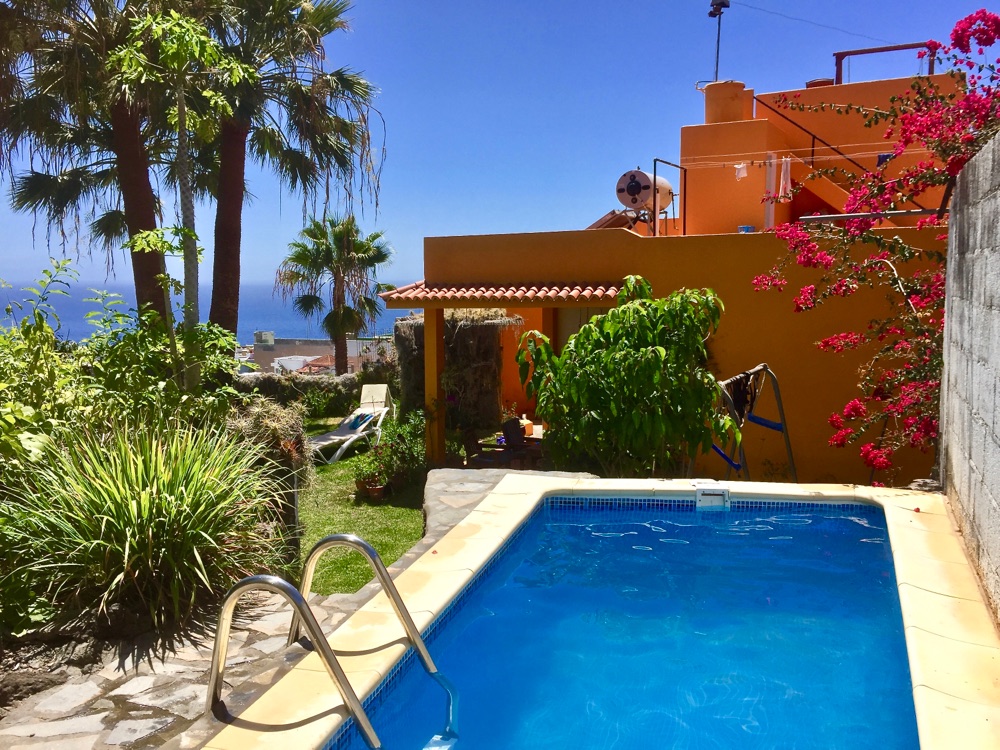
Casa Cardon
Our private holiday house above the village: three bedrooms for up to six guests, a pool, a garden with fruit trees, and a rooftop terrace with a unique view over Tazacorte and the Atlantic.
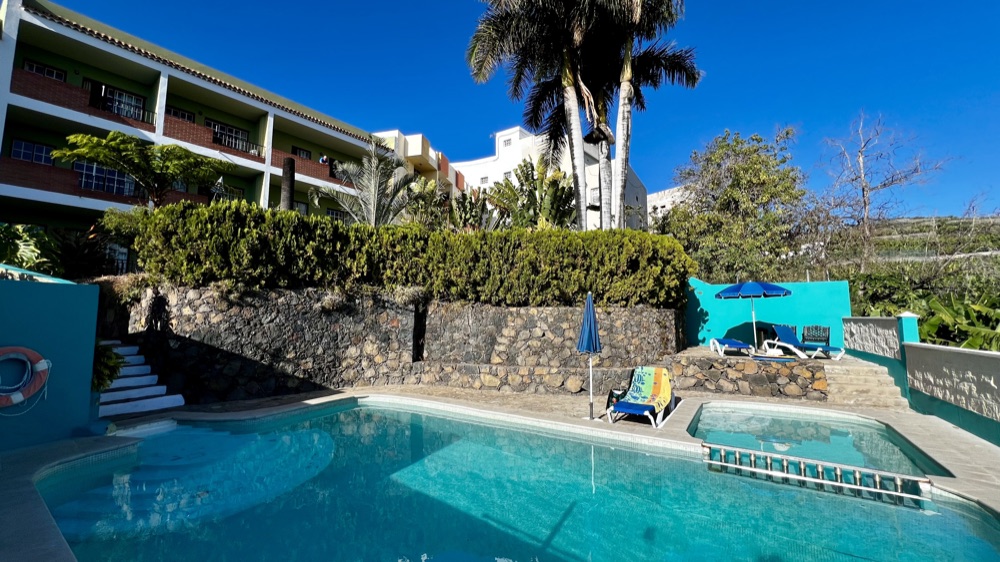
Atlantis Apartments
Studios and fully equipped apartments in the heart of Tazacorte, each with its own balcony and kitchen, a poolside garden and a rooftop chill-out area with sunset views. Walking distance to the beach and the square.
When to come
The weather here is mild all year, La Palma’s version of eternal spring. The south is warmer and sunnier, the north greener and cooler. One thing that surprises people: the busy season is winter, when Europeans come to escape the cold, not high summer. Spring and autumn are my favourite for hiking, and the stars are good all year at altitude.
So, is it worth it?
If you want nightclubs, big resorts and a guaranteed party, no, go somewhere else. But if you want dramatic nature, some of the best hiking in Europe, the darkest skies on the continent and a real Canarian island that has not been polished smooth for tourists yet, then there is nowhere I would rather send you. Just come before everyone else does.
Bookmark this one, we keep it updated. And dig into our guides to stargazing, the best hikes, nightlife and where to stay while you plan.
Leave a Reply